Announcing the Sentence
This is the very first part of the ceremony, where a messenger or friend delivers the sentence of seppuku. They are to speak briefly and firmly, to inspire courage and to keep the condemned calm. If the condemned wants to say something, they can, but the messenger must not be bribed or have a change of heart no matter what they say. Decline writing materials reasonably, and take any weapons (mainly swords). He is considered dead at the time of the announcement, which is usually done at night with the execution happening at dawn.
Choosing the Location
The location can happen in many places, with the main three being temples, the house where the condemned man is located, or in a jail. The condemned can speak his mind about the situation, but the location is not for him to decide; instead it is a decision of those in charge, and takes into consideration their crimes, rank, and behavior during confinement. Lords and retainers can commit seppuku in their palaces, senior samurai in gardens or outside, and lower ranking at their confinement place. Forcing a samurai to commit seppuku in a superiors house is demeaning, and is usually not done except for serious cases.
Preparing the Location
Preparation can range anywhere from very little to exquisite. For the lowest of the rankings, a pit for the head is dug, if held outside. For higher ranks, a mat path is laid out for them to walk on to their final destination, which is to be dimly lit and surrounded with incense. At least three tatami mats are placed on the ground with one more on top, which may be red to conceal the blood stains. For higher ranks, leather carpet is laid in the garden with a picket fence surrounding it, in an area of around thirty-six feet, and entrances at north and south. Curtains are hung, and candles are lit. The condemned would enter from the north, and sit facing the crowd. All items to be used in the ceremony are concealed behind a screen.
Swords
A short sword around 10 inches is to be used for cutting the stomach, with the hilt removed and a cloth wound around the blade twenty-eight times, as according to custom. Either a long sword or a short sword is used for the decapitation. If the condemned is of high ranking, the hilt of the sword used to behead his is to be wrapped in white cloth.
Attire and Hygiene
The condemned should have robes ready in their household, if they are in fact of the samurai class. No restrictions are held on the color, however light blue is very popular. The condemned should bathe and shave his head, although keep some of the hair for a very tight topknot. The face should not be washed with hot water, as that increases the bleeding. Rogue is advised on the cheeks, as a samurai should always be the color of cherry blossoms, even in death.
The Kaishaku
The role of the Kaishaku is to decapitate the committed. This person can be a friend or acquaintance of the condemned, although in prison the jailer always acts as the kaishaku. Any samurai must be aware that they could be chosen as a kaishaku, and although it is a major task it is one of honor, not burden, and they should prepare themselves spiritually and technically. Young swordsmen are usually not chosen unless they have extreme skill. In addition to their role as decapitator, they are also there to ensure that the process goes smoothly. Excess blood, resistance by the condemned, and even the head rolling too far forward are all things they are to be aware of to keep from happening. They usually have assistants, one to bring out the tray and sword, another to display the head to the crowd. This can be done by one man, although its much easier to have another. They are to remain unarmed.
Presenting of the Sword and Cutting of the Stomach
The sword is to be taken to the condemned along with the tray in complete silence. They are placed approximately three feet from the condemned, because according to tradition they must be far enough away to have to lean forward to reach it. After this, they condemned takes his seat, bows to the crowd, and takes off his upper clothing, with the right side first, then the left. They take the sword in the left hand, and then with the right. They stroke their stomach three times, and inch or so below the bellybutton. The condemned then thrusts the sword into his left side and drags it to the right, quickly and with a shallow incision no deeper than one inch and no wider than six inches. cutting is done with he right hand, with the left for support. Grip is to be right fist palm up, thumb furthest from the belly. Copied directly from Andrew Rankin, this is the rules of stomach cutting, in a nine step procedure
- Pull the table closer
- Pick up the sword
- Press the tip of the blade to the left side of the abdomen
- Cut above the navel
- Force the blade across to the right side
- Turn the angle of the blade ninety degrees
- Make a downward cut
- Using both hands if necessary, force the blade down to below the navel
- [Remove the blade and] rest the sword on the right knee
Decapitation
After the condemned is seated, the kaishaku stands to the rear left, with the sword out of the condemned's vision as courtesy. They assume striking position, with the exact moment of decapitation up to the kaishaku. The three best moments to strike, according to Rankin, are
- When the condemned reaches for the sword
- When he points the blade to his belly
- When he makes the initial incision
If the condemned speaks hostility, they are to be decapitated immediately. If the head is not completely cut off with the first blow, the kaishaku is to strike again, and depending on the condemned's rank, they can grab his topknot for ease of access. If they are wounded but not dead, the kaishaku can push the man down and stab him, and if he panics or resists, the assistants should hold him down firmly. If they are still moving after the decapitation, they are supposed to stab the neck.
Head Handling
Just after the decapitation, the executioner should drop to one knee and clean the blade with a piece of paper. The sword is to be returned to the scabbard, and the kaishaku is to step back and let his assistant(s) take care of the rest. If he doesnt have one, he switches his sword to his left hand, and with his right he picks up the head. It is not considered in ill taste to support the head with the blade. Showing the head is delicate, and should be shown with right profile, then left, and with regard for the reputation of the samurai. The head is then placed in a box specifically made for heads, however, this is an honor reserved for only the high ranking. Otherwise the head is covered in a white cloth. Most importantly, the head must not be shown to people of lower rank, this is disrespectful.
Source
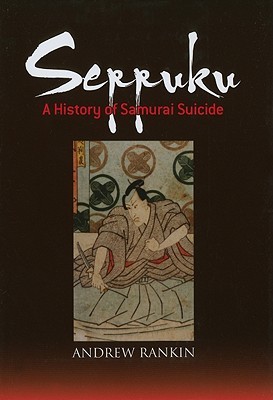
Rankin, Andrew. Seppuku: A History of Samurai Suicide. Tokyo, Japan: Kodansha International. 2011. Print