Sunday, December 15, 2013

Summary of Death and Dying in Japan

Tradition is a value that many people hold close to their hearts. The United States has traditions, and we're only around 200 years old. Imagine a small, isolated island that has been independent for centuries and centuries, held together by willpower and honor. That is Japan, and as a direct result of that they are not so willing to get rid of what they have always known. Combine that with a rapidly changing lifestyle and it results in a desire to grasp the past, specifically honor, and with honor can come death. I plan on wrapping up a few things this week before turning in my final project this Friday, specifically more about modern suicide in Japan.
Here is a fantastic video about suicide culture in Japan. The synopsis goes

"In a war on suicide, who is the enemy? ‘Saving 10,000′ is the story of an Irishman’s personal passion to uncover the true causes of the high suicide rate in Japan. The disturbing findings include the Japanese media`s perverse love affair with suicide, a variety of cruel and predatory economic pressures and an outdated and failing mental health care system. With the help of front-line experts and ordinary Japanese, many touched by the horror of suicide, the movie delivers practical proposals on how Japan can win a war on suicide. However with suicide such a taboo, the odds are nobody will listen. Or will they?"

This short (52 minute long) documentary features a lot about Japanese suicide culture, and has won several awards. Really a fantastic video, I recommend it wholeheartedly.

Sunday, December 1, 2013

The Aokigahara Forest, or the Suicide Forest

Here is a fantastic video by Vice about a tremendously famous area of Japan. There really isn't much to say about the documentary itself that one can not learn by watching it. Its really a surface look into the forest and the people who's lives it affects daily, with more detail than some people can stomach, so be warned. Corpes (mainly skeletons) are shown, so its not for the faint of heart

Sunday, November 17, 2013

Foundations for Japanese Views of Honor

This post is mainly going to be a run-down of where Japan's sense of honor and culture stem from, and how that culture has lasted throughout the years. A small update before we get to more this week


In all of East Asia, throughout all time, there has never been a country that has been as militarized as Japan for so long. From the late 12th century all the way up to the 19th Japan had been ruled by the military class of the samurai. This military rule lead to a complex and traditional way of doing things, all based around the honor of the samurai and their rule. Since honor was at the core of the cultural identity of the military class, and the military class ruled Japan, it is obvious that that would permeate into traditional Japanese ways of life, becoming a staple of how they lived, and in some ways are still living today.

One such observer of Japanese culture, Ruth Benedict, labeled Japanese moral behavior as "shame culture", where looking bad is akin to death. Modern day Japan has a word very close to English for honor, Meiyo. This word is closely related to several other words that can be found throughout Japanese history, such as na (name), haji (shame), menboku (face), chijoku(dishonor), iiji (pride), and sekentei (how you look to the world). Na and haji have been especially used for a long time as to describe the two sides of the same coin for Japanese samurai, as na was wanted and haji was avoided. On the topic of the shame culture, modern day Japan now has more words for shaming language than honor, which goes to show how the two sides of the same idea can often ebb and flow, and shows how the honor culture has been "tamed".

It is safe to assume that since honor and shame are so closely related, and that if honor is so important in the life of the average samurai and even possibly in the average person, that the threat of shame and dishonor could be great enough to get someone to conform to things that normally would astound an outsider, in one major case, suicide, be it ritualistic or on their own. This is but a short glance at the history of honor, yet gives a reason for honor culture. But what gives the military honor? That is a question for another day.

Source:
Ikegami, Eiko. The Taming of the Samurai. Cambridge: Harvard University Press. 1995. Print

Sunday, November 3, 2013

Types of Seppuku 

Continuing on with last weeks topic, this week is all about the different types of Seppuku, for there are many more than just one way to preform this ritual.

Ichimonji (One Horizontal Cut)

This was the standard form of seppuku during a time called the Tokugawa period (1603-1867), although it was uncommon leading up to that time. This was just a single cut across the abdomen, and early cases of it were just abandoned attempts at another form called jumonji, which was two cuts. A notable example of ichimonji would be Yakushiji Yoichi, who in a statement about his name (ichi, part of his name, was a different reading of the character for "one"), and insisted he do it this way, and left an impact about how seppuku was preformed for years. 

Jumonji (Two Crossed Cuts)

This is the more classical form of seppuku, where there is a horizontal cut made below the navel, and then a vertical cut just above the groin. Oftentimes the first cut would be more shallow, as to prevent the intestines from spilling out too early. Variations of this include kagi-jumonji (cutting downwards from the left side and left side towards the crotch, and then switching hands and cutting up towards the right) and migi-jumonji (a light cut from left to right, then cutting diagonally left back to left nipple).

Hachimonji (Two Upright Cuts)

An nontraditional form of seppuku, based on the tale of a warrior named Kasuya Muneaki, who cut his stomach in the shape of an 8 character in japanese. which is read as "hachi" in Japanese

Sanmonji (Three Horizontal Cuts)

Three cuts are considered legend after the greatest Japanese hero of all time, Yoshitsune preformed seppuku this way. In the rare cases this happens it was advised to begin well below the navel and work up from there. 

Oi-Bara (From The Stomach)

This was used beginning in the 1500s to refer to kaishakus who killed themselves after their masters had killed themselves. A retainer who beheaded his lord could not live with his honor intact, so he made the choice to kill himself. Later years this began to refer to anyone who killed themselves after their lord died. 


Tachi-bara (From Standing)

This was literally seppuku from a standing position, sometimes done against a pillar, and in one particular case the sword got stuck in the body and pillar after death, leaving the body upright. This was mainly done on the battlefield, as it was quick. 

Kama-Bara (Sickle Belly Rip)

This is a cultural phenomenon only found in theatre, as no reported cases of this have ever happened. The story comes from a peasant who wished to commit seppuku, yet had no sword. So he used a sickle. However, he could not bring himself to do it, so he abandoned the idea, yet while walking away he tripped and fell on his sickle. His brother, a samurai, eventually came around and relieved him in the most appropriate manner- beheading

Kage-Bara (Concealed Belly Rip)

This was a form of seppuku meant for dramatic affect, in which the cuts were done before, wrapped in robes, and revealed for dramatic effect.This is mostly from plays, however, there are a few examples of people preforming this, especially when they wanted all eyes on them for the last moments of their deaths. 


Source
Rankin, Andrew. Seppuku: A History of Samurai Suicide. Tokyo, Japan: Kodansha International. 2011. Print

Sunday, October 27, 2013

The Ritual of Seppuku

The rituals of seppuku are and interesting blend of tradition and honor, mixing together to create a deadly ceremony that spells the end for the participant. The entire ceremony can be cut up into several distinct parts, each one as important as the last. Without one of them, you're really missing the whole thing. This is the ritual of seppuku, as described by Andrew Rankin


Announcing the Sentence
This is the very first part of the ceremony, where a messenger or friend delivers the sentence of seppuku.  They are to speak briefly and firmly, to inspire courage and to keep the condemned calm. If the condemned wants to say something, they can, but the messenger must not be bribed or have a change of heart no matter what they say. Decline writing materials reasonably, and take any weapons (mainly swords). He is considered dead at the time of the announcement, which is usually done at night with the execution happening at dawn.

Choosing the Location
The location can happen in many places, with the main three being temples, the house where the condemned man is located, or in a jail. The condemned can speak his mind about the situation, but the location is not for him to decide; instead it is a decision of those in charge, and takes into consideration their crimes, rank, and behavior during confinement. Lords and retainers can commit seppuku in their palaces, senior samurai in gardens or outside, and lower ranking at their confinement place. Forcing a samurai to commit seppuku in a superiors house is demeaning, and is usually not done except for serious cases. 

Preparing the Location
Preparation can range anywhere from very little to exquisite. For the lowest of the rankings, a pit for the head is dug, if held outside. For higher ranks, a mat path is laid out for them to walk on to their final destination, which is to be dimly lit and surrounded with incense. At least three tatami mats are placed on the ground with one more on top, which may be red to conceal the blood stains. For higher ranks, leather carpet is laid in the garden with a picket fence surrounding it, in an area of around thirty-six feet, and entrances at north and south. Curtains are hung, and candles are lit. The condemned would enter from the north, and sit facing the crowd. All items to be used in  the ceremony are concealed behind a screen. 

Swords
A short sword around 10 inches is to be used for cutting the stomach, with the hilt removed and a cloth wound around the blade twenty-eight times, as according to custom. Either a long sword or a short sword is used for the decapitation. If the condemned is of high ranking, the hilt of the sword used to behead his is to be wrapped in white cloth. 

Attire and Hygiene
The condemned should have robes ready in their household, if they are in fact of the samurai class. No restrictions are held on the color, however light blue is very popular. The condemned should bathe and shave his head, although keep some of the hair for a very tight topknot. The face should not be washed with hot water, as that increases the bleeding. Rogue is advised on the cheeks, as a samurai should always be the color of cherry blossoms, even in death. 

The Kaishaku
The role of the Kaishaku is to decapitate the committed. This person can be a friend or acquaintance of the condemned, although in prison the jailer always acts as the kaishaku. Any samurai must be aware that they could be chosen as a kaishaku, and although it is a major task it is one of honor, not burden, and they should prepare themselves spiritually and technically. Young swordsmen are usually not chosen unless they have extreme skill. In addition to their role as decapitator, they are also there to ensure that the process goes smoothly. Excess blood, resistance by the condemned, and even the head rolling too far forward are all things they are to be aware of to keep from happening. They usually have assistants, one to bring out the tray and sword, another to display the head to the crowd. This can be done by one man, although its much easier to have another. They are to remain unarmed.

Presenting of the Sword and Cutting of the Stomach
The sword is to be taken to the condemned along with the tray in complete silence. They are placed approximately three feet from the condemned, because according to tradition they must be far enough away to have to lean forward to reach it. After this, they condemned takes his seat, bows to the crowd, and takes off his upper clothing, with the right side first, then the left. They take the sword in the left hand, and then with the right. They stroke their stomach three times, and inch or so below the bellybutton. The condemned then thrusts the sword into his left side and drags it to the right, quickly and with a shallow incision no deeper than one inch and no wider than six inches. cutting is done with he right hand, with the left for support. Grip is to be right fist palm up, thumb furthest from the belly. Copied directly from Andrew Rankin, this is the rules of stomach cutting, in a nine step procedure
  1. Pull the table closer
  2. Pick up the sword
  3. Press the tip of the blade to the left side of the abdomen
  4. Cut above the navel
  5. Force the blade across to the right side
  6. Turn the angle of the blade ninety degrees
  7. Make a downward cut
  8. Using both hands if necessary, force the blade down to below the navel
  9. [Remove the blade and] rest the sword on the right knee
Decapitation
After the condemned is seated, the kaishaku stands to the rear left, with the sword out of the condemned's vision as courtesy. They assume striking position, with the exact moment of decapitation up to the kaishaku. The three best moments to strike, according to Rankin, are
  1. When the condemned reaches for the sword
  2. When he points the blade to his belly
  3. When he makes the initial incision
If the condemned speaks hostility, they are to be decapitated immediately. If the head is not completely cut off with the first blow, the kaishaku is to strike again, and depending on the condemned's rank, they can grab his topknot for ease of access. If they are wounded but not dead, the kaishaku can push the man down and stab him, and if he panics or resists, the assistants should hold him down firmly. If they are still moving after the decapitation, they are supposed to stab the neck. 

Head Handling
Just after the decapitation, the executioner should drop to one knee and clean the blade with a piece of paper. The sword is to be returned to the scabbard, and the kaishaku is to step back and let his assistant(s) take care of the rest. If he doesnt have one, he switches his sword to his left hand, and with his right he picks up the head. It is not considered in ill taste to support the head with the blade. Showing the head is delicate, and should be shown with right profile, then left, and with regard for the reputation of the samurai. The head is then placed in a box specifically made for heads, however, this is an honor reserved for only the high ranking. Otherwise the head is covered in a white cloth. Most importantly, the head must not be shown to people of lower rank, this is disrespectful. 

Source
Rankin, Andrew. Seppuku: A History of Samurai Suicide. Tokyo, Japan: Kodansha International. 2011. Print

Sunday, October 6, 2013

Sources aquired

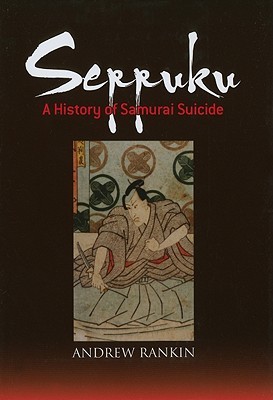
I recently got the book Seppuku: A History of Samurai Suicide, by author Andrew Rankin, from Kent library.

Looking at this book gives us an insight on the facts, origins, and history of Seppuku, for which the book is aptly named. It splits itself into three distinct parts, named

History of Seppuku to 1600
With information on ancient texts, and real life testaments from those involved in the ceremonies, this is really a good source for the beginning information

The Seppuku Ritual
Gives information from everything on the proper swords to use, to location, this is my go to source on descriptions of the situation

History of Seppuku after 1600
Gives information up to around the 20th century, which is remarkable that such a painful tradition could last so long. It is basically the closest one could get to modern examples

This book really puts into perspective a lot of the myths, legends, and straight up historical information of Seppuku from many times, and is a source I will be using for the rest of the project. 

The next book I acquired was The Taming of the Samurai, by Eiko Ikegami.
This is really to just put into context the way these traditions lived, from the lives of the ancient Samurai and their forms of honor and tradition. 

I also have The Thorn in the Chrysanthemum, a book on "Suicide and Economic success in Modern Japan"


From what I have been told, this is an excellent book on the suicidal tendencies of modern Japan, and how it ties in with the entire Japanese lifestyle

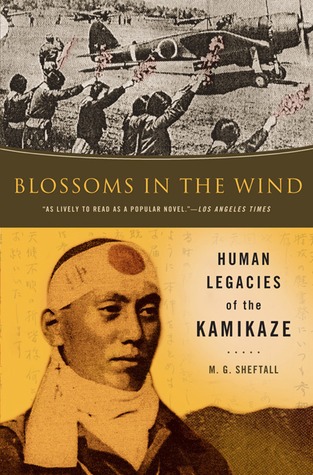
And finally, I have Blossoms In The Wind: Human Legacies of the Kamikaze
Its an in depth book about the Kamikaze of Japan during WWII, and will give me an interesting outlook on the situation.


Sunday, September 29, 2013

While I've been doing more research on Seppuku, I would like to take a bit of time to look at another form of suicide that was previously seen in Japan: the famous kamikaze. The word kamikaze means "Divine Wind" in Japanese, and comes from the story of an ancient typhoon in 1281 that destroyed a group of Mongrel invaders headed towards Japan. It was then later appropriated to talk about many young pilots from Japan who would drive their planes into Allied (mostly American) warships and other high profile targets to inflict massive damage and strike fear into the hearts of their enemies.[1]


A picture of the "Divine Wind" [2]


Pilots prepared for a kamikaze attack [3]

Its really fascinating to me whenever I think about this. Looking at it seems like a desperate last attempt by the Japanese to win an unwinnable war, but at the same time these people are bound by an ancient honor system that gives them courage. After checking out more books in the library, expect to see more this week.


[1]"kamikaze." Greenwood Encyclopedia of International Relations. Santa Barbara: ABC-CLIO, 2002. Credo Reference. Web. 30 September 2013.
[2]http://en.wikipedia.org/wiki/File:MokoShurai.jpg
[3]http://en.wikipedia.org/wiki/File:A6M5_52c_Kyushu.jpg